Efficient & collaborative AI
Collaboration between large and small language models, efficient inference, and privacy-aware generation across edge and cloud systems.
PhD studentThe University of Hong Kong
Efficient AI. Intelligent sensing.
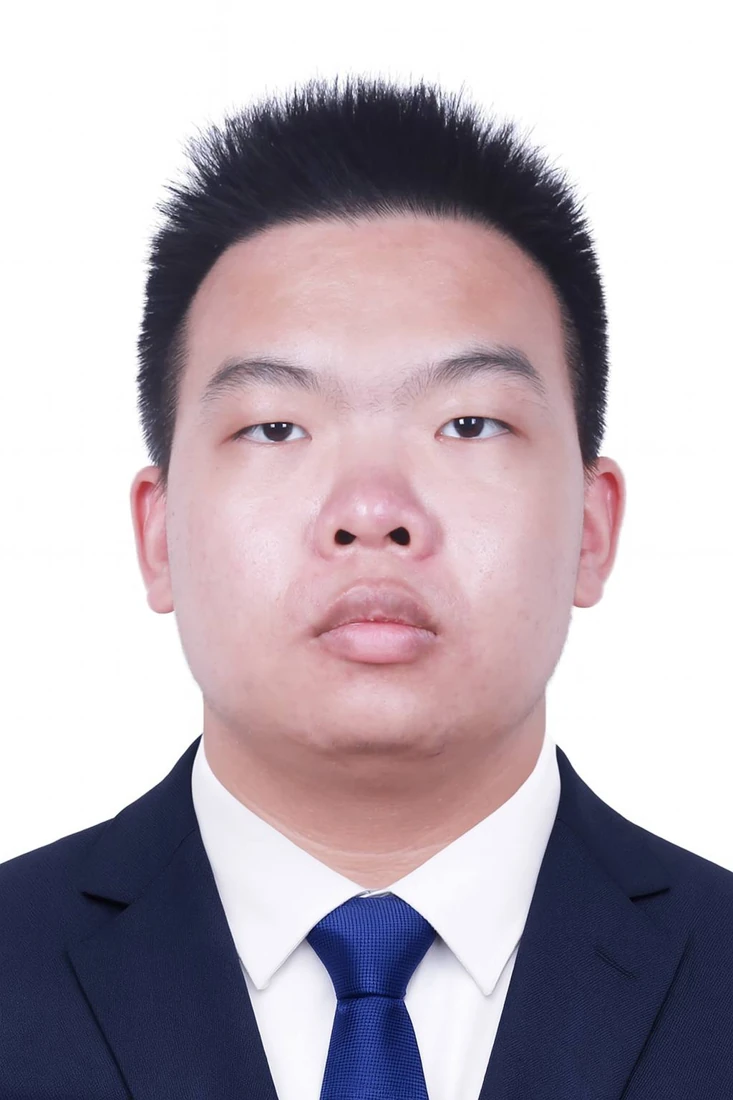
I am a PhD student in the Department of Mechanical Engineering at the University of Hong Kong, where I began my doctoral studies in September 2026. My interests span efficient AI, intelligent sensing, and neuromorphic devices.
My work explores how language models can collaborate across edge and cloud systems, and how learning can connect with emerging hardware and physical sensors. Previously, I was a research assistant at Xiaomi AI Lab and worked with research teams at Peking University, Tsinghua University, and Beijing Institute of Technology, where I earned my B.Eng. in 2025.
Research interests
Collaboration between large and small language models, efficient inference, and privacy-aware generation across edge and cloud systems.
MEMS and wearable sensors, human–machine interfaces, and learning from physical signals for useful, responsive sensing systems.
Emerging devices for learning and computation, including optoelectronic synapses, multi-valued logic, and ternary neural networks.
Research output
An open-source framework for reinforced training and inference in multi-agent language-model systems.
We present MARTI (Multi-Agent Reinforced Training and Inference), an open-source framework designed to facilitate scalable and efficient learning of multi-agent LLM systems. MARTI supports centralized multi-agent interactions and distributed policy training, with the added capability of multi-turn asynchronous rollouts to enhance training efficiency. The framework includes dynamic workflows for multi-agent interactions, which integrate both rule-based verifiable rewards and LLM-based generative rewards. We validate the effectiveness of MARTI through comprehensive experiments on diverse mathematical tasks, demonstrating that multi-agent LLM-based systems outperform single-agent systems within the same inference budget after convergence. Our contributions lay the foundation for exploring scalable collaborations within LLM-based multi-agent systems and advancing the capabilities of large reasoning models.
@inproceedings{wang2026marti,
  title = {MARTI: A Framework for Multi-Agent LLM Systems Reinforced Training and Inference},
  author = {Kaiyan Zhang and Kai Tian and Runze Liu and Sihang Zeng and Xuekai Zhu and Guoli Jia and Yuchen Fan and Xingtai Lv and Yuxin Zuo and Che Jiang and Yuru wang and Jianyu Wang and Ermo Hua and Xinwei Long and Junqi Gao and Youbang Sun and Zhiyuan Ma and Ganqu Cui and Ning Ding and Biqing Qi and Bowen Zhou},
  year = {2026},
  booktitle = {International Conference on Learning Representations 2026},
  url = {https://proceedings.iclr.cc/paper_files/paper/2026/hash/e045c55a71fb4fc04d9a20579415247d-Abstract-Conference.html}
}
A flexible calorimetric flow sensor on a kirigami-structured substrate for bonding to complex surfaces.
@inproceedings{wang2026kirigamiflowsensor,
  title = {High Performance Flexible Calorimetric Flow Sensor Based on Kirigami-Structured Substrate for Complex Surface Bonding Scenarios},
  author = {Kai Qiao and Daishan Yue and Hanlun Guan and Jianyu Wang and Zong Liu and Huikai Xie and Xiaoyi Wang},
  year = {2026},
  booktitle = {2026 IEEE 21st International Conference on Nano/Micro Engineered and Molecular Systems (NEMS)},
  doi = {10.1109/nems69704.2026.11633848},
  url = {https://doi.org/10.1109/nems69704.2026.11633848},
  pages = {287-290}
}
Defect-engineered diamond optoelectronic devices for ultraviolet-driven synaptic computation.
@article{wang2026diamondoptoelectronicsynapses,
  title = {Defect-engineered hydrogen-terminated diamond optoelectronic synapses for UV-driven neuromorphic computing},
  author = {Lingxue Meng and Jianyu Wang and Linhai Guo and Xiuqi Wang and Yichen Wang and Xiaoying Zheng and Hao Zhu and Qiliang Li and Li Tian},
  year = {2026},
  journal = {Journal of Colloid and Interface Science},
  doi = {10.1016/j.jcis.2026.140876},
  url = {https://doi.org/10.1016/j.jcis.2026.140876},
  volume = {722},
  pages = {140876}
}
Carbon nanotube source-gating transistors enable three-state devices, ternary logic circuits, and neural networks.
Multi-valued logics (MVLs) offer higher information density, reduced circuit and interconnect complexity, lower power dissipation, and faster speed over conventional binary logic system. Recent advancement in MVL research, particularly with emerging low-dimensional materials, suggests that breakthroughs may be imminent if multistates transistors can be fabricated controllably for large-scale integration. Here, a concept of source-gating transistors (SGTs) is developed and realized using carbon nanotubes (CNTs). By extending the source electrode into the channel of conventional CNT transistors, a controllable p-n homojunction is formed, allowing CNT-SGTs to reliably switch between three distinct states. Capitalizing on the straightforward fabrication process of CNT-SGTs, ternary inverters, NMIN and NMAX logic gates, ternary SRAM cells, and a ternary neural network achieving 100% image classification accuracy have been successfully implemented. This study represents the most advanced and highest-performing ternary circuits realized with low-dimensional materials to date. This progress highlights the potential of CNT-SGTs in driving the future of MVL architectures.
@article{wang2025ternarylogiccnt,
  title = {High-performance ternary logic circuits and neural networks based on carbon nanotube source-gating transistors},
  author = {Xuehao Zhu and Meiqi Xi and Jianyu Wang and Panpan Zhang and Yi Li and Xiao Luo and Lan Bai and Xingxing Chen and Lian-mao Peng and Yu Cao and Qiliang Li and Xuelei Liang},
  year = {2025},
  journal = {Science Advances},
  doi = {10.1126/sciadv.adt1909},
  url = {https://doi.org/10.1126/sciadv.adt1909},
  volume = {11}
}
A unified empirical view of when large and small language models should collaborate during decoding.
Large Language Models (LLMs) exhibit impressive capabilities across various applications but encounter substantial challenges such as high inference latency, considerable training costs, and the generation of hallucinations. Collaborative decoding between large and small language models (SLMs) presents a promising strategy to mitigate these issues through methods including speculative decoding, contrastive decoding, and emulator or proxy fine-tuning. However, the specifics of such collaborations, particularly from a unified perspective, remain largely unexplored. Inspired by dual-process cognitive theory, we propose a unified framework in this paper, termed Fast and Slow Generating (FS-GEN). Within this framework, LLMs (sometimes along with SLMs) are categorized as System 2 (slow and deliberate), while independent SLMs are designated as System 1 (fast and intuitive). We provide a comprehensive analysis of these collaborative methodologies, elucidating their common properties and shedding light on the differential knowledge capabilities of System 2 versus System 1 through the FS-GEN framework. Our findings indicate that only a small proportion of collaborative interactions (approximately less than 20% in most instances) are necessary across various methods. These interactions between System 1 and System 2 conform to a scaling law related to the parameter ratios, enabling predictable collaboration. Furthermore, we explore the specific conditions under which collaboration proves most effective, particularly from an uncertainty perspective, offering novel insights that may guide future optimization efforts. Our research underscores that the fundamental distinction between System 1 and System 2 lies in the uncertainty of next token predictions, where interventions by System 2 are crucial to support System 1. Code for Reproduction: https://github.com/TsinghuaC3I/FS-GEN
@misc{wang2024fastslowgenerating,
  title = {Fast and Slow Generating: An Empirical Study on Large and Small Language Models Collaborative Decoding},
  author = {Kaiyan Zhang and Jianyu Wang and Ning Ding and Biqing Qi and Ermo Hua and Xingtai Lv and Bowen Zhou},
  year = {2024},
  howpublished = {arXiv preprint},
  doi = {10.48550/arXiv.2406.12295},
  url = {https://arxiv.org/abs/2406.12295}
}
Gesture and force recognition using surface EMG and accelerometer signals.
@misc{wang2024semghmi,
  title = {Enhanced HMI via sEMG and Accelerometer Sensor-Based Gesture and Force Recognition},
  author = {Pengyu Huo and Zurui Zhang and Yusen Guo and SI Huang and Jiayu Luo and Jianyu Wang and Qiliang Li},
  year = {2024},
  howpublished = {PRiME 2024},
  url = {https://scholar.google.com/citations?view_op=view_citation&hl=en&user=IZHivHEAAAAJ&citation_for_view=IZHivHEAAAAJ:2osOgNQ5qMEC}
}
Privacy-aware generation that combines cloud language models with smaller local models for context-aware instruction following.
With the advancement of language models (LMs), their exposure to private data is increasingly inevitable, and their deployment (especially for smaller ones) on personal devices, such as PCs and smartphones, has become a prevailing trend. In contexts laden with user information, enabling models to both safeguard user privacy and execute commands efficiently emerges as an essential research imperative. In this paper, we propose CoGenesis, a collaborative generation framework integrating large (hosted on cloud infrastructure) and small models (deployed on local devices) to address privacy concerns logically. Initially, we design a pipeline to create personalized writing instruction datasets enriched with extensive context details as the testbed of this research issue. Subsequently, we introduce two variants of CoGenesis based on sketch and logits respectively. Our experimental findings, based on our synthesized dataset and two additional open-source datasets, indicate that: 1) Large-scale models perform well when provided with user context but struggle in the absence of such context. 2) While specialized smaller models fine-tuned on the synthetic dataset show promise, they still lag behind their larger counterparts. 3) Our CoGenesis framework, utilizing mixed-scale models, showcases competitive performance, providing a feasible solution to privacy issues.
@inproceedings{wang2024cogenesis,
  title = {CoGenesis: A Framework Collaborating Large and Small Language Models for Secure Context-Aware Instruction Following},
  author = {Kaiyan Zhang and Jianyu Wang and Ermo Hua and Biqing Qi and Ning Ding and Bowen Zhou},
  year = {2024},
  booktitle = {Proceedings of the 62nd Annual Meeting of the Association for Computational Linguistics (Volume 1: Long Papers)},
  doi = {10.18653/v1/2024.acl-long.235},
  url = {https://aclanthology.org/2024.acl-long.235/},
  pages = {4295–4312}
}
Try a different title, author, topic, or venue.
Academic journey
Sep 2026 — Present
PhD student
Department of Mechanical Engineering
2021 — 2025
B.Eng. in Microelectronics Science and Engineering
School of Integrated Circuits and Electronics
Nov 2025 — Jul 2026
Research Assistant·AI Lab
Apr 2024 — Mar 2025
Research experience·AIS Lab
Dec 2023 — Jun 2025
Research experience·C3I Lab
Sep 2023 — Jun 2024
Research experience·I2MEMES Lab
Recent milestones
Started my PhD in Mechanical Engineering at the University of Hong Kong.
New work appeared at ICLR and IEEE NEMS, and in the Journal of Colloid and Interface Science. Publications
Joined Xiaomi AI Lab as a research assistant.
Graduated from Beijing Institute of Technology with a B.Eng. in Microelectronics Science and Engineering.
Recognition
Beijing Institute of Technology
Beijing Institute of Technology
Get in touch
For research discussions and collaboration, the best way to reach me is by email.